

That tight, wind-tunnel look people dread doesn’t come from too much surgery. It comes from surgery done on the skin when the problem was three layers deeper.
Medically reviewed by Dr. Jamil Al Jamali, German Board (Facharzt) certified Consultant Plastic, Reconstructive & Hand Surgeon, Dubai. Last reviewed: January 2026. About Dr. Jamil.
Key Takeaways
- A deep plane facelift repositions the SMAS layer, while a traditional facelift mainly tightens skin.
- Because tension sits under the skin rather than on it, results look more natural and last 10 to 15 years.
- It is a more demanding operation best performed by a surgeon who does it regularly.
Everyone has seen the version that went wrong. The skin looks stretched, the corner of the mouth sits a little sideways, and the face wears a faint permanent surprise. People assume that happened because the surgeon did too much. Usually it is the opposite. The surgeon worked the one layer that was never the problem: the skin.
A face sags because of what sits under the skin, a sheet of muscle and connective tissue called the SMAS. When only the skin gets tightened, it ends up carrying a load it was never built for, stretched over a structure that is still sitting too low. So this piece is really about depth, and why the layer a surgeon chooses to work on decides almost everything you will care about later.
Start With the Layer That Actually Dropped
The SMAS, or superficial musculoaponeurotic system, is a continuous layer that gives the cheek and jawline their shape. With age it descends, and the skin comes down with it. Tighten the skin alone and you have stretched the covering while leaving the fallen structure exactly where it was. Gravity has time on its side, so within months the skin relaxes again and the lift fades, sometimes leaving visible tension near the ears in the meantime.
Dr. Jamil reads every face as an anatomical problem before an aesthetic one, the same way he approaches a correction of previous surgery. The question is never how tight the skin can go. It is where the descent began and how to put that layer back.
Working the Deep Plane
In a deep plane facelift, the SMAS and the platysma beneath it are released and lifted as one connected sheet, with the skin still attached and still fed by its own blood supply. Because the skin is never separated and never pulled on its own, the tension lives underneath, at the level where the sagging started. The lift also travels upward toward the cheekbone rather than backward toward the ears, which restores fullness where it belongs instead of flattening and widening the face.
That upward vector is a large part of why the result reads as a rested version of the same face rather than a swept-back one.
Real Results
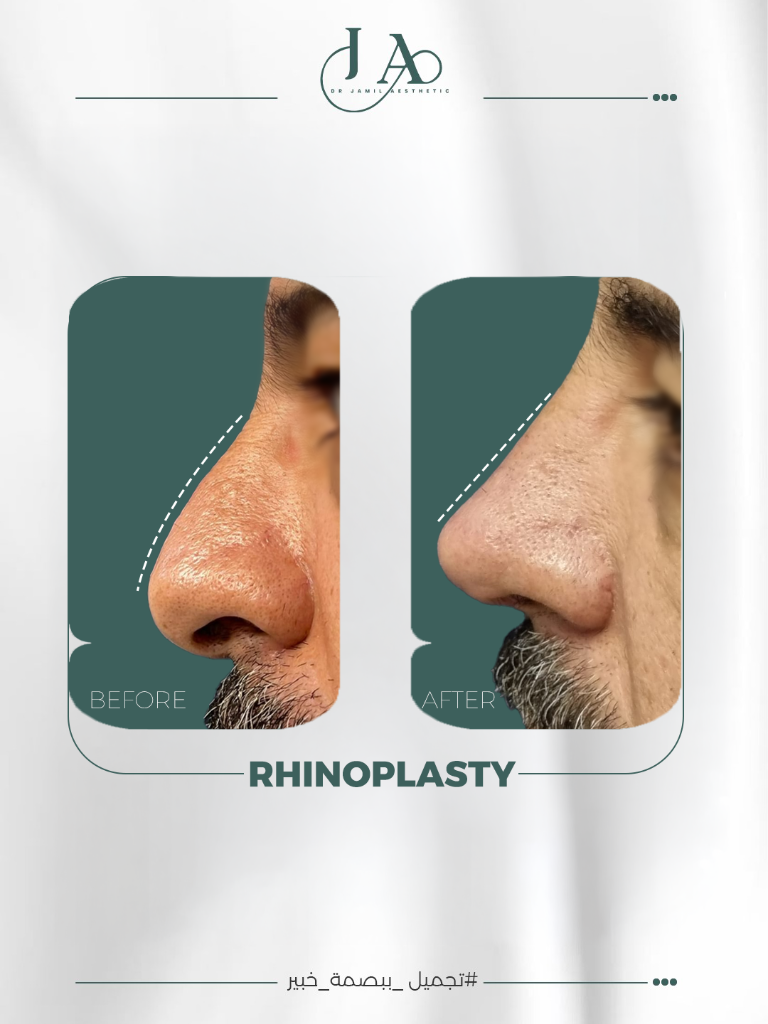 Before / After
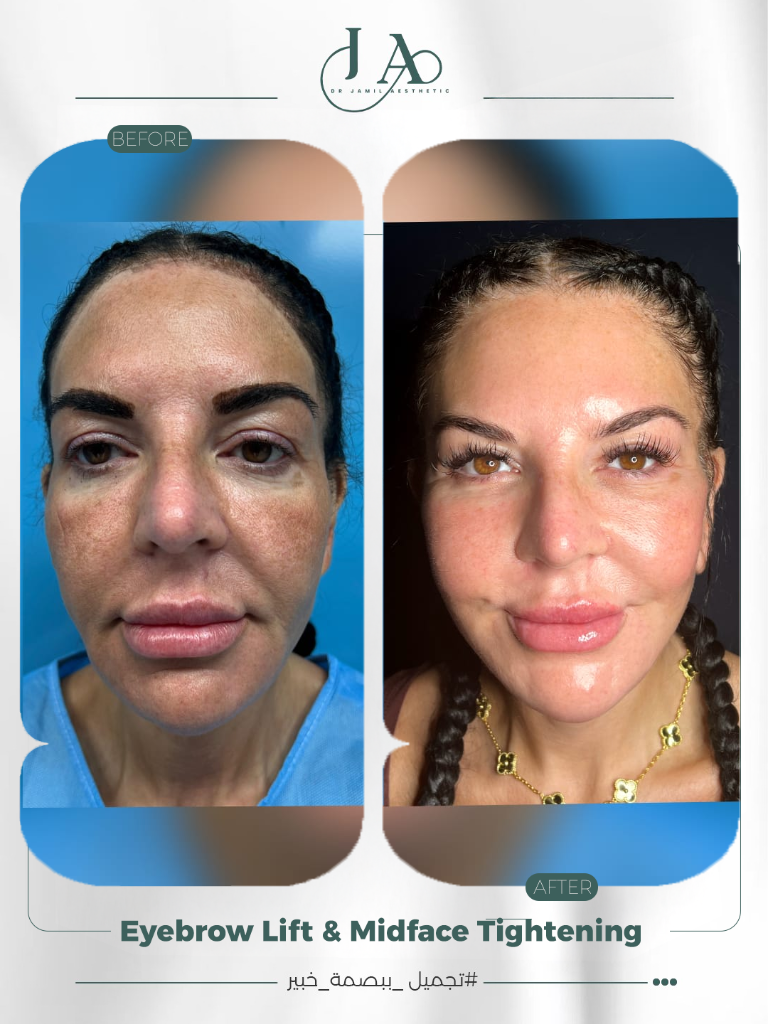 Before / After
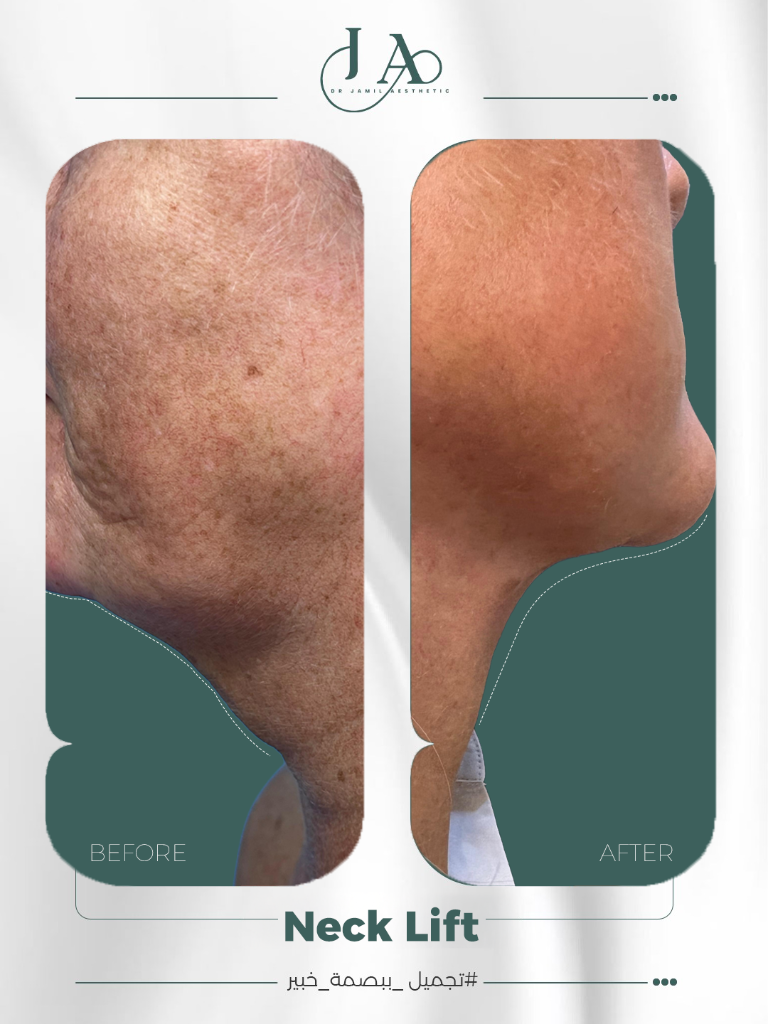 Before / After
Individual results vary. Cases shown with patient consent.
Why the Scars Behave Differently
Scar quality in a facelift comes down mostly to tension. Pull the skin tight and the incision along the hairline and ear has to hold that pull for weeks while it heals, and tension is precisely what widens and thickens a scar over time. A deep plane closure sets the skin back without stretching it, so those incisions tend to settle thinner and fade faster. Placement helps too, following the natural creases around the ear and disappearing into the hairline. Healed examples sit in the Premium Portfolio, shown with consent.
When the Answer Is “Not Yet,” or “Not This”
A deep plane facelift is a serious operation, and plenty of people who ask about it are better served by something else. Someone in their thirties with early, minor laxity rarely needs it. Someone whose real complaint is skin texture, pigment, or fine lines is describing a skin-quality issue that surgery does not treat. And a smoker unwilling to stop for the healing window is accepting a real jump in complication risk, because this technique leans entirely on preserved blood supply to the skin.
Turning those patients away, or asking them to wait, is part of doing the job honestly. A surgeon who says yes to everyone is not necessarily the one looking after your result.
The Neck Comes as Part of the Deal
Faces and necks age together, and lifting the face while leaving the neck alone tends to age the neck by comparison. That is why a deep plane facelift is so often planned alongside neck lift and platysmaplasty, which handles the vertical banding and loose skin under the jaw. Whether to combine them is a call made during the assessment, weighed on your anatomy rather than added on to the invoice. Done together, the jaw and neck read as one clean line instead of a corrected face above an older neck.
Recovery, Told Straight
Most patients are comfortable in private life within two to three weeks, which is when the bulk of visible swelling and bruising clears. The finer settling continues quietly for a few months as the tissues relax fully into place. Some numbness around the ears and cheeks in the early weeks is normal and fades as the nerves recover. The German aftercare protocol Dr. Jamil follows treats this phase as part of the surgery, with structured follow-up and clear limits on activity while the tissue is still fragile. Push through it too fast and you can compromise an otherwise excellent result.
How to Vet a Facelift Surgeon
Once you accept that a facelift is a family of operations rather than one, the questions to ask get sharper. Which technique are you recommending for my face, and why that one? How often do you perform a deep plane lift specifically, not facelifts in general? Can I see healed results at a year, when tension problems and scar quality have had time to show themselves?
A surgeon who lives in this plane answers those directly and explains the reasoning for your particular anatomy. Vague replies, a nudge to book quickly, or a single technique offered to every face regardless are all worth noticing. The decision is anatomical, and the right surgeon treats it that way.
What the Evidence Says
A 2025 systematic review in Aesthetic Plastic Surgery, pooling 21 studies and 2,896 patients, reported patient satisfaction of 94.4% for deep plane facelifts versus 87.8% for SMAS techniques. (Source: Aesthetic Plastic Surgery (2025), systematic review of 2,896 patients.)
FAQ
How is a deep plane facelift different from a traditional facelift?
A traditional lift tightens skin, sometimes with a stitched fold in the SMAS. A deep plane lift releases and repositions the SMAS and skin together as one connected layer, moving tension off the skin. The payoff is a more natural result that lasts longer and heals with thinner scars.
How long does a deep plane facelift last?
Because the correction happens at the structural layer rather than the surface, results typically hold well for a decade or more, with aging continuing naturally from that new baseline. Skin quality, sun exposure, and lifestyle all shift the timeline.
Is it riskier than a standard facelift?
It is more technically demanding and worked closer to the facial nerve, which is exactly why it belongs with a surgeon who performs it regularly and has formal training in it. In experienced hands the safety record is well established.
What age is right for it?
There is no set age. Timing follows the degree of structural descent, not the number on an ID. Many patients are in their late forties to sixties, but candidacy is about anatomy, which is what the assessment reads.
Can it fix a previous facelift?
Yes. Revision facelift work is among the more complex areas of the field because it deals with already-operated tissue, but a deep plane approach can often restore a natural position that an earlier skin-only lift distorted.
Curious what is actually happening beneath your own skin, rather than a generic explanation of the procedure? A Strategic Anatomical Assessment with Dr. Jamil starts with imaging and a frank read of what deep plane surgery can and cannot do for your face. Request a private consultation.