

Patients arrive with a result they didn’t ask for and often can’t explain. Before anyone talks about fixing it, the first job is working out what actually happened.
Medically reviewed by Dr. Jamil Al Jamali, German Board (Facharzt) certified Consultant Plastic, Reconstructive & Hand Surgeon, Dubai. Last reviewed: January 2026. About Dr. Jamil.
Key Takeaways
- A revision consultation is diagnostic first: understanding what was done before any plan.
- Revision surgery is harder than the original because of scarring and altered tissue.
- Realistic improvement, not a flawless reset, is the honest goal.
People come to a revision consultation carrying a result they never wanted and usually cannot fully explain. Before anyone talks about correction, the first job is diagnostic: working out exactly what was done in the original surgery, what went differently than intended, and what tissue is actually left to work with. A consultation that jumps straight to promising a fix has skipped the only part that matters, because you cannot correct what you have not first understood.
Why Revisions Are Harder Than the Original
A first-time facelift or rhinoplasty works with tissue that has never been touched, with predictable blood supply and intact landmarks. A revision works with tissue already cut, repositioned, and scarred at least once. Blood supply can be compromised, landmarks can be shifted or missing, and scar tissue can hide the original anatomy. What looks like a simple correction on the surface can be a far more tangled problem underneath, which is exactly why revision surgery is a distinct discipline and belongs with surgeons who do it regularly rather than occasionally.
The Investigation Precedes the Plan
A revision assessment is more than looking at the result. It means gathering what is known about the original procedure, examining the tissue for scarring and blood-supply changes, and using imaging to read the structure beneath the surface. Only once that picture is complete can a realistic plan be built. This is the same rigour Dr. Jamil brings to every corrective surgery case, whether the issue is a distorted contour, a functional problem, or a scar that healed badly. The plan is a conclusion, not a starting point.
Real Results
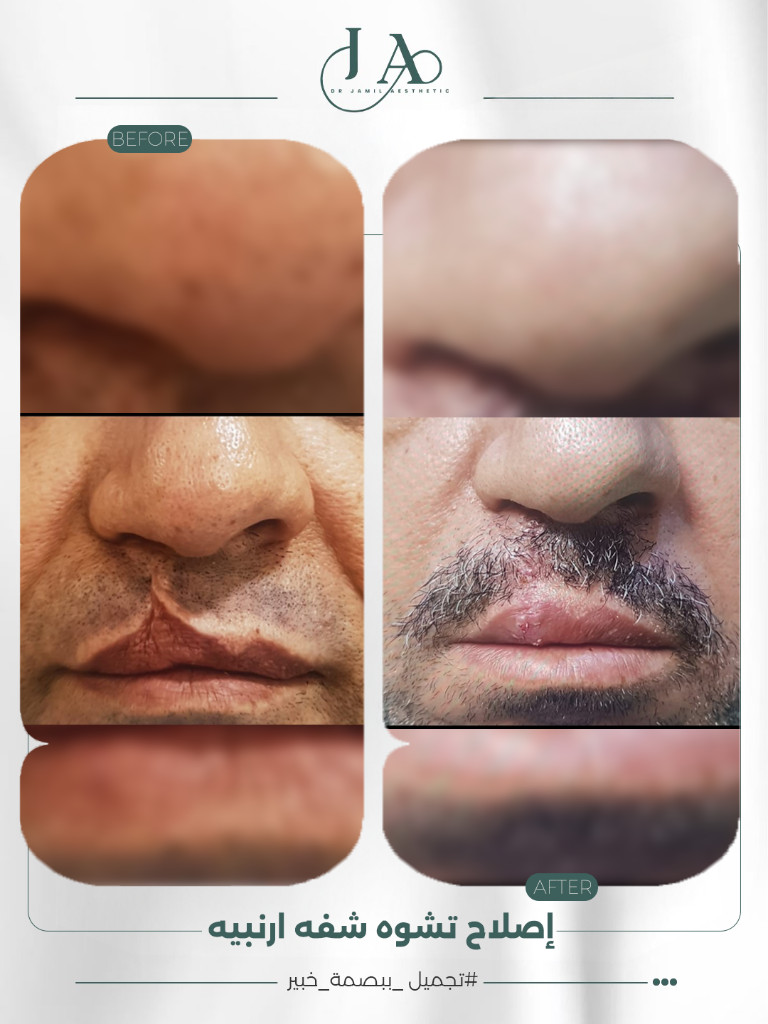 Before / After
Individual results vary. Cases shown with patient consent.
Why Some Requests Get a “No”
Not every revision should go ahead immediately, or in the form the patient is picturing. If tissue has not recovered enough from a previous surgery, operating again too soon can make things worse. If expectations do not match what is anatomically possible, saying so is more useful than agreeing and disappointing later. And if a less invasive option has not been tried, that comes first. Declining, or delaying, even when it is not what the patient hoped to hear, is part of the job. Willingness to say no is itself a form of expertise.
Timing Beats Impatience
Revision patients are understandably eager to fix something that bothers them daily. But tissue needs time to heal before it can be reliably reoperated on, typically six months to a year after the original, depending on what was done. Swelling has to resolve, scar tissue has to mature, and blood supply has to stabilise. Operating on unhealed tissue to satisfy the wish for a faster fix trades a slightly longer wait for a materially higher risk of a compromised correction. The timeline is set by biology, not by frustration, however valid the frustration is.
The Psychology of Being Let Down Once
Revision patients carry something first-timers do not: a previous disappointment, sometimes a betrayal of trust, occasionally real distress about their appearance. They arrive guarded, having researched exhaustively, braced to be dismissed again. Meeting that with patience and directness, rather than with false reassurance or clinical coldness, is part of the actual work. The most useful thing on offer at this stage is not a promise. It is an honest, unhurried explanation of what happened and what is possible, delivered as to an adult who can handle the truth. Patients let down once are usually better served by candour than by comfort, and they can tell the difference.
Realistic vs Unrealistic Expectations
A big part of the conversation is calibrating what is achievable. Realistic looks like meaningful improvement of a specific problem: a straighter nose, a corrected contour, a softened scar, a restored symmetry. Unrealistic looks like expecting a revision to return the tissue to a perfect, untouched state as if the first surgery never happened, especially where structure was removed and cannot simply be put back. Good revision work often makes a real, visible difference while stopping short of a flawless reset, because it is working with tissue that has already been altered. Anyone promising perfection on a complex revision is overselling.
What to Bring, and Why This Is a Signature Focus
Any records or details from the original procedure, including what was done and by whom if known, help enormously, as do pre-surgery photos if you have them, to establish a clear baseline for what changed. Real corrected cases, shown with consent, sit in the Premium Portfolio, and the ethos behind them runs through the practice philosophy. Revision and rescue work is central to how this practice defines itself, and it matters practically: a complex revision handled by someone who does them constantly, with the reconstructive background to manage complications, is in materially safer hands than one handled by a surgeon for whom revision is a rare exception.
What the Evidence Says
The surgical literature is direct that procedures like rhinoplasty carry a high rate of revision, and that revision cases are complicated by scar tissue, distorted anatomy, and limited remaining native tissue, which is why they demand more careful planning than the original. (Source: peer-reviewed rhinoplasty literature (PMC / NIH).)
FAQ
How long should I wait before a revision?
Generally six months to a year after the original, so tissue can heal and swelling resolve before a plan is made. Operating too early on unhealed tissue can complicate the correction.
Is revision riskier than the original?
Usually, because previously operated tissue has altered blood supply and scarring that demand more careful planning. This is why revisions are best handled by surgeons with specific experience in corrective work.
What should I bring?
Any records or details of the original procedure, including what was done and by whom if known, plus pre-surgery photos if available, to establish a baseline for what changed.
Can any bad result be corrected?
Many can be meaningfully improved, though not all can be fully returned to an ideal, especially where tissue or structure was removed. An honest assessment sets realistic expectations, which is why some requests get a no or a not-yet.
Will you criticise my previous surgeon?
No. The focus is your anatomy and the path forward, not assigning blame for the original result. The consultation is a diagnostic and planning conversation, not a judgment of past decisions.
If a previous procedure left you with something you did not expect, the way forward starts with an honest read of what is actually there now. A Strategic Anatomical Assessment, without judgment about the original decision, is where every revision case with Dr. Jamil begins. Request a private consultation. #TheSecondChance