

Under-eye puffiness and under-eye hollowing look almost identical in the mirror and need opposite treatments. The under-eye area is where a well-meant quick fix most often turns into a longer, costlier one.
Medically reviewed by Dr. Jamil Al Jamali, German Board (Facharzt) certified Consultant Plastic, Reconstructive & Hand Surgeon, Dubai. Last reviewed: January 2026. About Dr. Jamil.
Key Takeaways
- Hollowing may respond to filler; bags, excess skin, and heavy lids usually need surgery.
- Blepharoplasty removes or repositions tissue, which filler cannot do.
- Filler placed over herniated fat can make the area look puffier.
A syringe of filler under the eyes is one of the most requested quick fixes in aesthetics, and for a specific kind of patient it is genuinely the right call. For a different patient who looks almost identical in the mirror, it hides the real issue for a few months and then makes it more obvious once the filler drifts somewhere it was never meant to sit.
The eyes are the first thing anyone reads on a face, and they punish the wrong intervention harder than anywhere else. That makes the diagnosis, before anything touches the skin, the part that actually matters.
Two Problems Wearing the Same Face
Hollowness under the eyes can come from genuine volume loss in the tear trough, where fat has thinned with age. Placed correctly there, filler helps. But bags, puffiness, and a heavy upper lid usually come from something else entirely: fat pads pushing forward through weakened muscle, or skin that has lost its elasticity. Filler does nothing about excess tissue except add more on top of it, which is how filling around a bag to disguise it ends up making the whole lower lid look fuller and heavier.
What Surgery Actually Does Down There
Micro-surgical blepharoplasty goes straight to the source. On the upper lid, excess skin, and sometimes a strip of muscle, comes off to lift the hooded weight. On the lower lid, herniated fat is either removed or repositioned to fill the hollow beneath it, which corrects the bag and the tear trough in one move. The whole operation is about redistribution and removal, and that is the reason it solves what filler structurally cannot.
Real Results
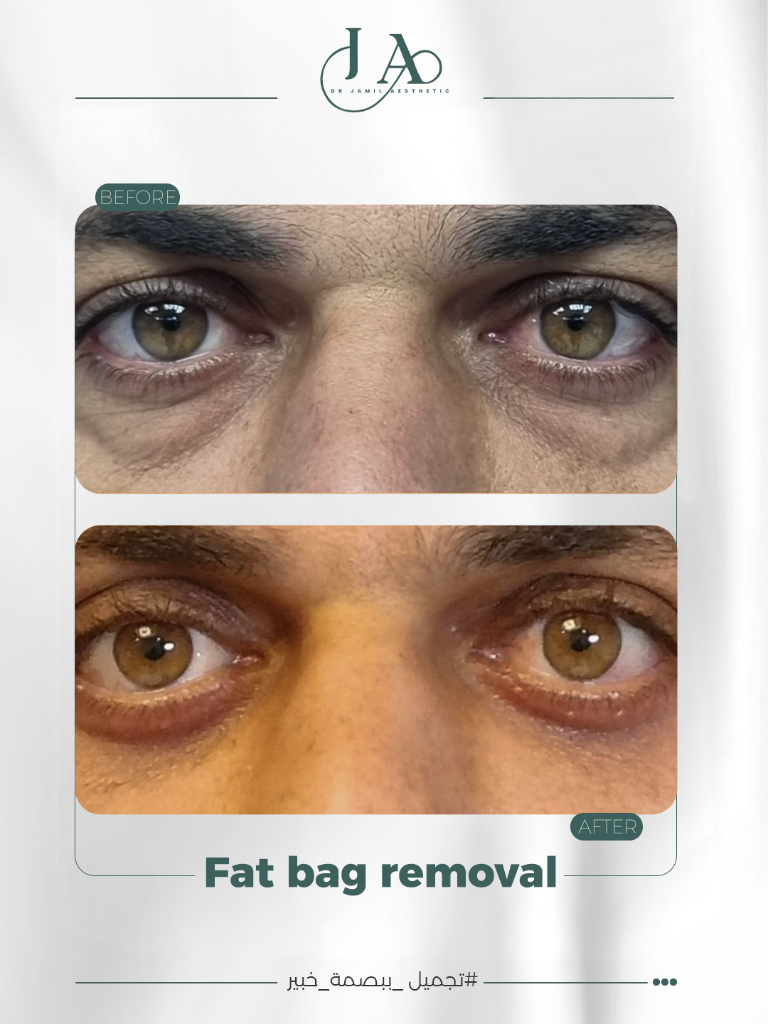 Before / After
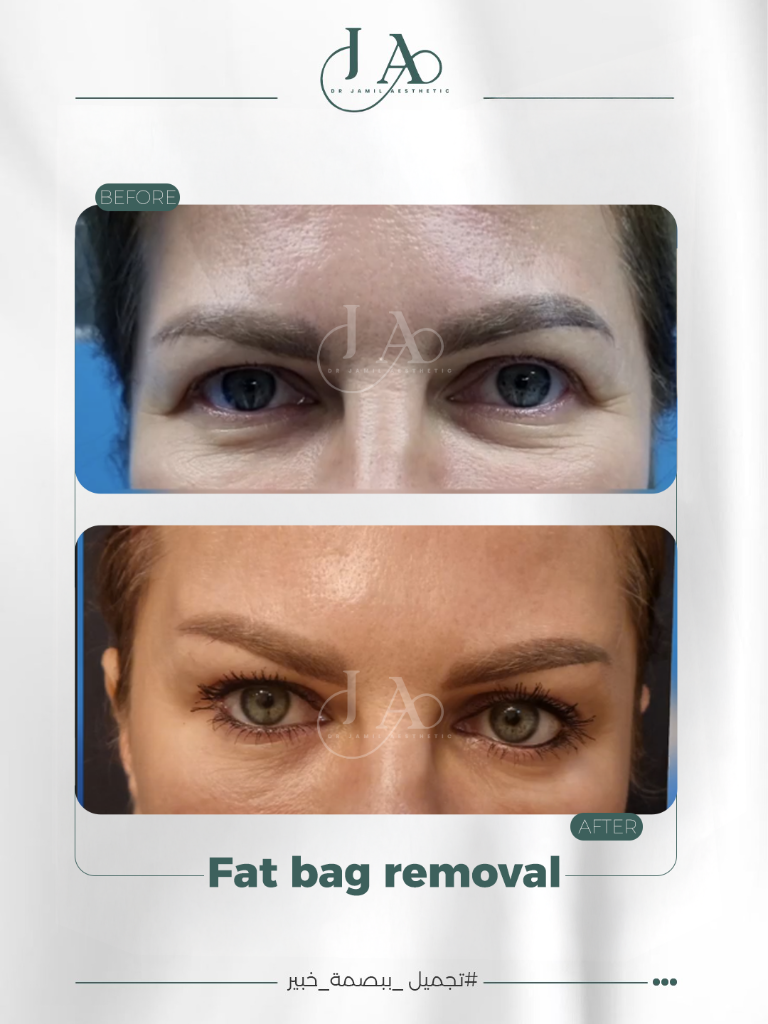 Before / After
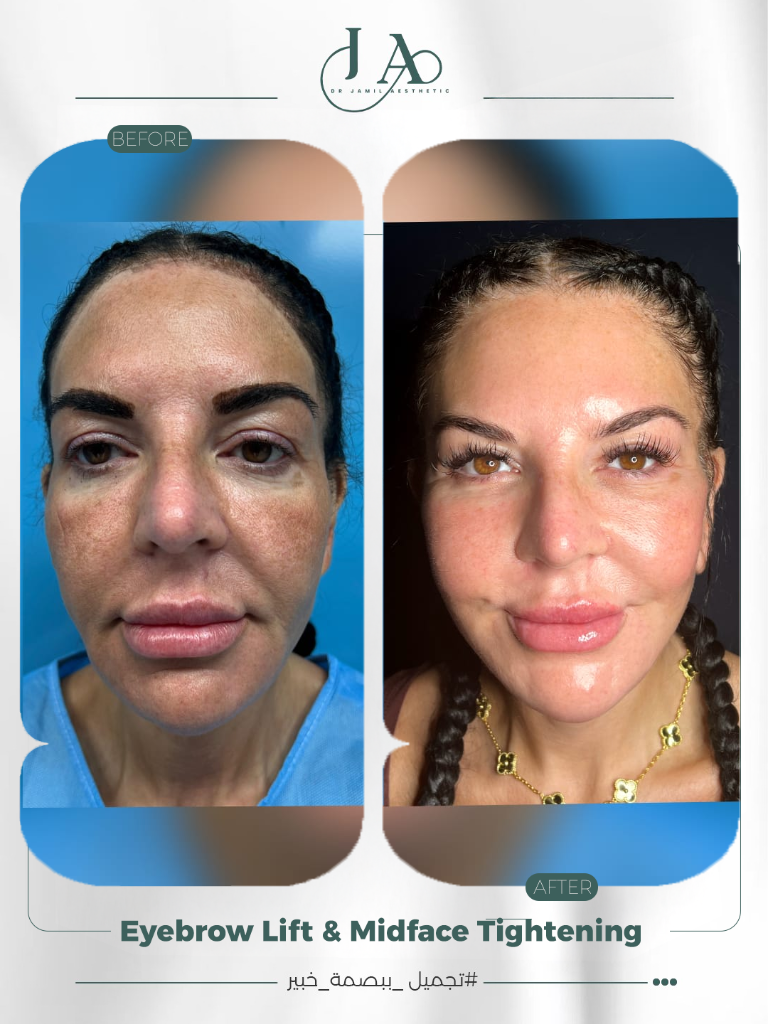 Before / After
Individual results vary. Cases shown with patient consent.
The Scar You Usually Cannot Find
Upper-lid incisions sit inside the natural crease, hidden by the fold of the lid once healed. Lower-lid work can often go through a transconjunctival approach, meaning the incision is made inside the eyelid and leaves no external scar at all. As with everything in Dr. Jamil's work, the best sign of good surgery is that you cannot find the evidence of it. Healed results sit in the Premium Portfolio.
Sometimes the Lid Was Never the Problem
What looks like a heavy upper lid is sometimes a descended brow pressing down on it, and operating on the lid alone would take skin the brow actually needs. Lower-lid hollowing can be part of a broader midface descent that a deep plane facelift addresses more completely. An eye that has rounded or drooped at the outer corner may need canthoplasty to rebuild the almond shape rather than a standard blepharoplasty. Reading which layer is truly responsible is the entire point of the assessment.
Why Getting It Wrong Costs More
Patients who get filler over what is really structural fat herniation often end up puffier and heavier, sometimes with a faint bluish tint where product sits too superficially, and that can linger because some fillers resist dissolving. Fixing it usually means dissolving the filler, waiting, and then doing the surgery that was needed in the first place. So the filler did not save an operation. It added a step, and a bill, in front of one.
Recovery Is Faster Than People Expect
Blepharoplasty recovers quickly on the social calendar. Bruising and swelling are expected for the first week to ten days, and most patients are comfortable in public, often behind sunglasses, within about two weeks. Vision can be briefly blurry from ointment and swelling in the first days. The result reads as rested rather than altered, which is the goal. Done well, nobody should be able to point at what was done, only notice that the eyes look less tired.
A Rough Guide to Which You Need
This never replaces an in-person read, but it orients you. A shadowed hollow with no bulge, over smooth and still-tight skin, points toward volume loss, and filler may help. A visible bag or bulge, loose or crepey skin, or a heavy hooded upper lid points toward excess or displaced tissue, and filler will not touch it. The trap is that both look like tiredness at a glance, and treating the wrong cause moves you backward rather than sideways.
What the Evidence Says
The American Society of Plastic Surgeons notes that lower eyelid surgery addresses excess skin and repositions or removes fat, which is a structural change that fillers cannot reproduce. (Source: American Society of Plastic Surgeons (ASPS).)
FAQ
How do I know if I need filler or blepharoplasty?
A structural assessment of skin laxity, fat-pad position, and muscle tone is the only reliable way to tell. As a pattern, isolated hollowing without bulging may respond to filler, while bags, excess skin, or a heavy lid usually need surgery.
Is the scarring visible?
Upper-lid incisions hide in the natural crease, and lower-lid correction is often done from inside the eyelid with no external scar. Once healed, upper-lid scars are typically very hard to spot.
How long do results last?
Upper-eyelid results often last a decade or more. Lower-lid fat removal or repositioning tends to be long lasting, since the fat pads do not usually return, though the face keeps aging naturally around the eyes.
Can filler make bags worse?
Yes. Placed over herniated fat instead of into a true hollow, filler adds to the fullness, and superficial placement can cast a bluish tint. Diagnosing the cause first is what avoids this.
Can the two be combined?
In select cases. Once excess skin and fat are corrected surgically, a conservative touch of filler can refine a residual hollow, but the surgery generally comes first.
Before you add anything to your under-eye area, it is worth knowing what is structurally going on. A Strategic Anatomical Assessment will tell you whether the answer is volume, removal, both, or patience. Book a private assessment.