

The name sounds like a package you buy off a shelf. What sits underneath it is a bespoke surgical plan built around the specific ways one body responded to pregnancy.
Medically reviewed by Dr. Jamil Al Jamali, German Board (Facharzt) certified Consultant Plastic, Reconstructive & Hand Surgeon, Dubai. Last reviewed: January 2026. About Dr. Jamil.
Key Takeaways
- A Mommy Makeover is a coordinated plan, usually combining a tummy tuck with breast surgery.
- It repairs diastasis recti, a muscle separation that exercise cannot close.
- Best timing is after you are done having children and at a stable weight.
“Mommy Makeover” is a marketing term, and it does the actual surgery a small disservice. The phrase makes it sound like a bundle, a spa day with a recovery attached. In practice it is a coordinated plan assembled around three things pregnancy and breastfeeding tend to change at once: the position of the abdominal muscles, the elasticity of the skin, and the volume and shape of the breasts. Rarely does a patient need only one of those addressed.
Once you see it as a plan rather than a product, what you should be shopping for changes. You are not buying a package. You are commissioning a set of decisions that have to fit together on your particular body.
What Pregnancy Changes Structurally
Two changes happen with enough predictability that no amount of core work reverses them. The rectus abdominis muscles, the vertical bands of the core, can separate down the midline, a condition called diastasis recti. And breast tissue that expanded during breastfeeding often does not fully retract, leaving looser skin with less internal support and frequently a lower position. Crunches will not close a muscle separation, because the muscles have not weakened. They have drifted apart, and only a surgical repair brings them back to the midline.
Why Combining and Sequencing Matter
A typical plan pairs abdominal repair, handling the muscle separation and excess skin through a tummy tuck, with a breast procedure such as a lift, an augmentation, or both, depending on what the tissue needs. Done together where it is medically sensible, that means one anesthesia and one recovery rather than two. It also forces the plan to account for how each procedure affects the other, since repairing the abdomen changes the torso's proportions, which changes how a given breast size will read on the frame. Planning them as a single case is what separates a balanced result from two procedures that do not quite speak to each other.
Real Results
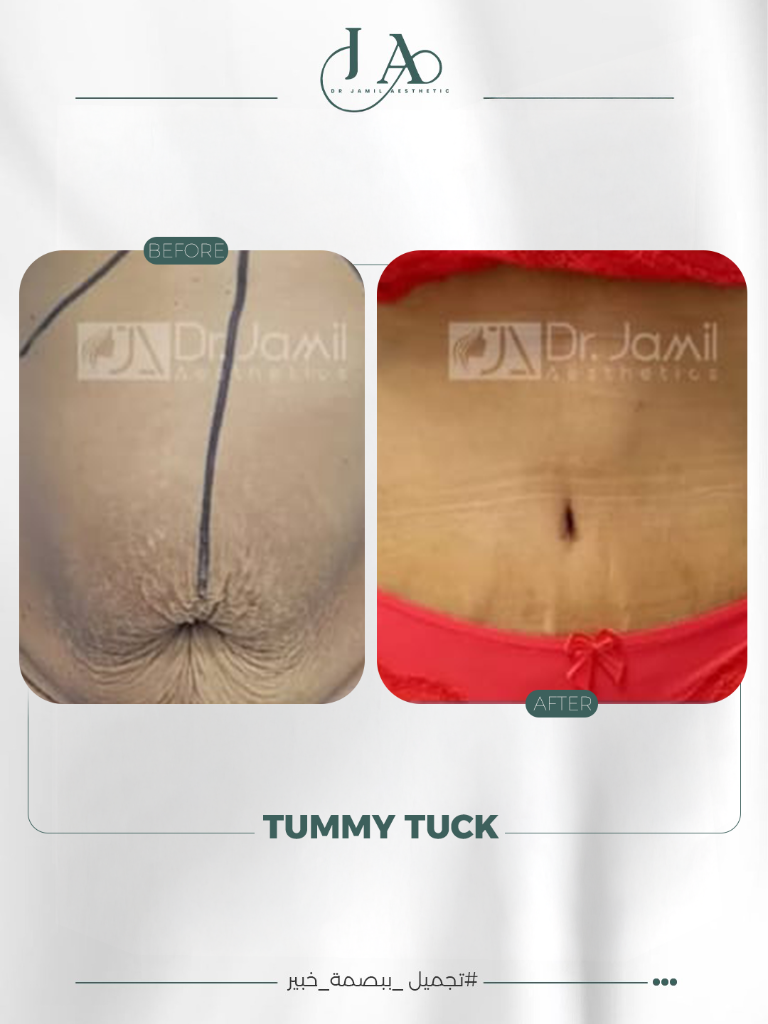 Before / After
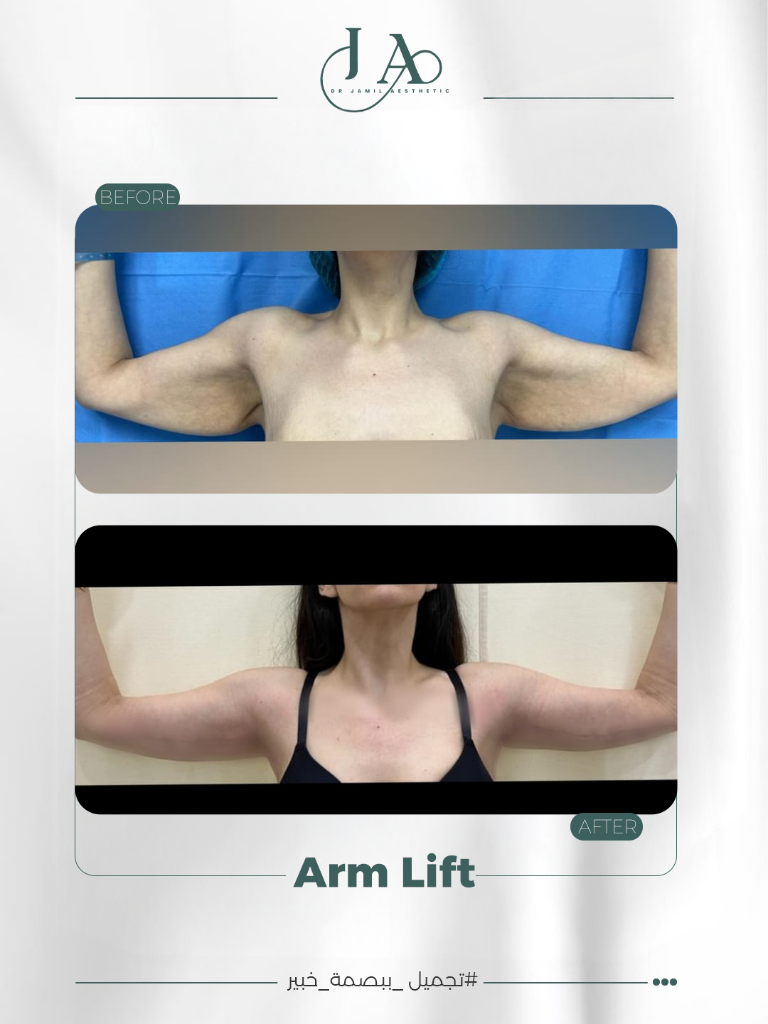 Before / After
Individual results vary. Cases shown with patient consent.
The Belly Button Gives It Away
Most people assume the hard part of a tummy tuck is removing skin. The demanding part is bringing the navel back out through tightened tissue and shaping it so it looks natural, without a giveaway scar ring. A flat abdomen topped by an obviously reconstructed belly button still reads as surgery. We go deeper into that in the Masterclass writing on abdominoplasty.
Who Should Wait, and Who Should Hold Off Entirely
Timing is a medical decision, not a scheduling one. Most surgeons advise waiting until you are done having children, since a later pregnancy can undo an abdominal repair, and until you have stopped breastfeeding for several months so the breast tissue has stabilized. Weight should be close to your long-term baseline, because significant change afterward alters the result. A patient still planning pregnancies, still mid-way through major weight loss, or carrying health factors that raise surgical risk may hear a recommendation to postpone. That conversation is part of responsible planning rather than an obstacle to it.
Every Plan Is Individual
There is no template, and a clinic offering a one-size package should prompt a question rather than a deposit. One patient has serious muscle separation and loose skin but breasts that barely changed. Another has the reverse. A third needs both, at very different degrees. Measuring the separation, judging skin quality, assessing breast tissue and position, and understanding what the patient actually wants to feel like all feed a plan that is hers alone. The word makeover flattens all of that. The surgery under it is tailored.
The Emotional Weight It Carries
This surgery sits at an unusual intersection. It is real surgery with a real recovery, chosen by women who have often spent years putting their own bodies last. Many describe the goal not as vanity but as wanting to recognise themselves again, to feel at home in a body that did something remarkable and was changed by it. The aim is to restore her own pre-pregnancy structure, not to convert her into someone else's ideal, and treating it with that respect matters as much as the technique.
Recovery on a Realistic Timeline
A combined Mommy Makeover is major surgery and deserves honest expectations. The first week is the most restricted, with limited movement protecting the muscle repair. Most patients manage daily life within two to three weeks, return to light exercise around six weeks, and get cleared for full core work only once the repair has fully healed, usually a few months out. Help at home in that first week, especially with small children who cannot understand why they cannot be lifted, is not a luxury. Arranging it is part of arranging the surgery.
Combined vs Separate Procedures
Some patients ask whether to do everything in one surgery or space it out. Combining, when medically appropriate, buys one anesthesia, one recovery, and a plan that balances the whole torso as a unit, at the cost of a single longer operation and a more demanding first recovery. Separating buys shorter individual surgeries and easier single recoveries, but two rounds of anesthesia and results planned in isolation. For most healthy candidates the combined route wins for good reasons, but health, the extent of each procedure, and life circumstances all weigh into it.
What the Evidence Says
As the American Society of Plastic Surgeons describes it, repairing the abdominal muscle separation is an integral part of a tummy tuck, not an optional add-on, which is why the abdominal component of a Mommy Makeover is a genuine structural repair. (Source: American Society of Plastic Surgeons (ASPS).)
FAQ
What procedures are included?
Most often a tummy tuck to repair diastasis recti and remove excess skin, combined with a breast lift, augmentation, or both. Liposuction is sometimes added for contouring. The exact mix depends on an individual assessment.
How soon after pregnancy can I have it?
Generally once you have finished having children, stopped breastfeeding for several months, and reached a stable weight, often around six months to a year postpartum at minimum. Operating too early risks a result that later shifts.
Is combining the procedures safe?
When appropriate for your health and the procedures involved, combining under one anesthesia is standard practice and means a single recovery. A full medical and anatomical assessment decides whether it is advisable for you.
Will it leave large scars?
A tummy tuck leaves a low horizontal scar within the bikini line, and breast procedures leave scars whose pattern depends on the technique. Placement and tension-controlled closure keep them discreet, and they fade over time.
Can I have more children afterward?
You can, but a later pregnancy can stretch the repaired muscles and skin again and undo part of the result, which is why surgeons advise waiting until you are done.
Rebuilding what pregnancy changed calls for a plan drawn around your anatomy, not a bundle. A Strategic Anatomical Assessment maps out exactly what your body needs, and in what order. Request a private consultation.