
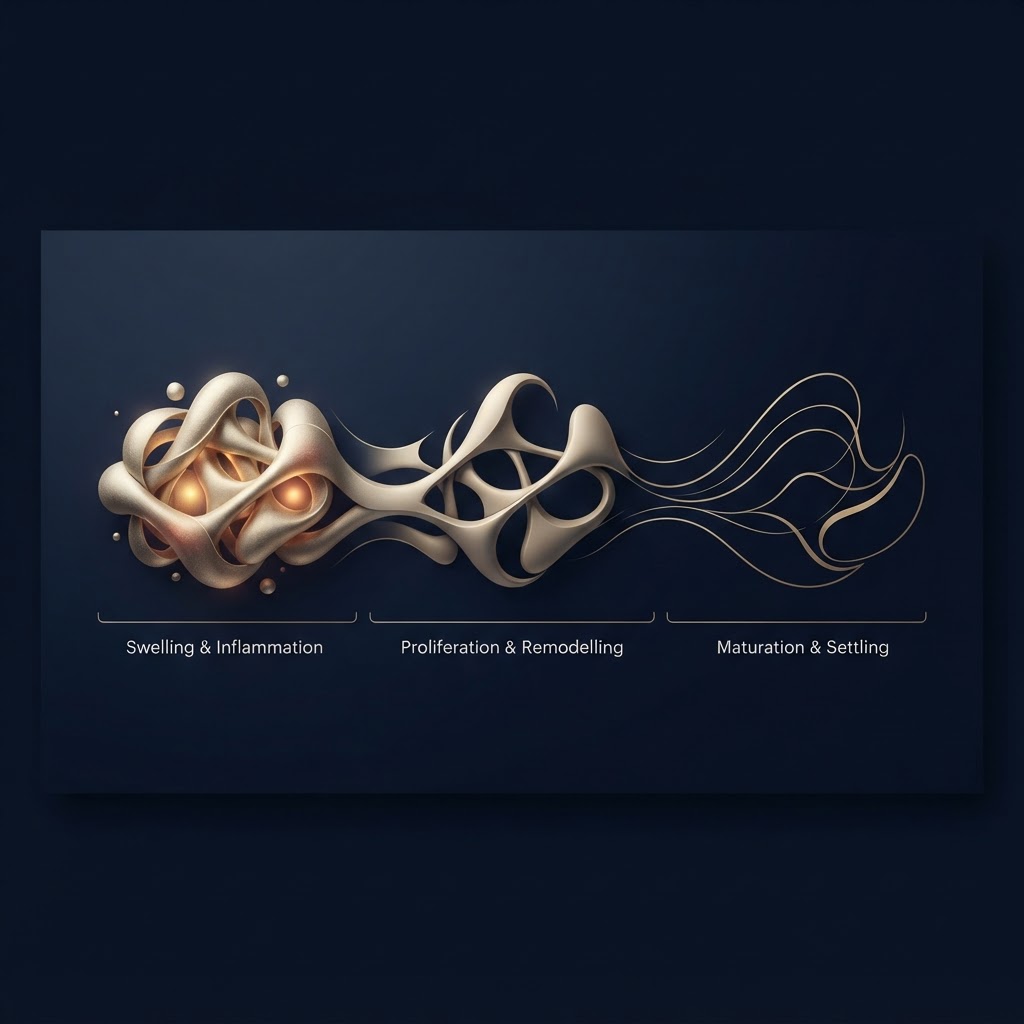
Most facelift disappointment in the first month is not a bad result, it is an unfinished one. Here is what the tissue is doing at each stage, and why the final answer takes months rather than weeks.
Medically reviewed by Dr. Jamil Al Jamali, German Board (Facharzt) certified Consultant Plastic, Reconstructive & Hand Surgeon, Dubai. Last reviewed: February 2026. About Dr. Jamil.
Key Takeaways
- The first two to three weeks clear the bulk of swelling and bruising, not the final result.
- Numbness and tightness are expected early and resolve as nerves and tissue settle over months.
- Judging a facelift at week three is judging an unfinished process.
Ask about recovery and you will usually be told a number of days. That number answers the wrong question. It tells you when you can be seen in public, not when the operation has finished doing what it was designed to do.
Those are separate timelines, and confusing them is the reason some patients panic in week two about a result that had not yet arrived.
Days one to seven: the noisy phase
The first week is dominated by swelling, bruising and a firm, tight sensation. The face can look fuller than it did before surgery, which is disconcerting if nobody warned you.
Sleeping with the head elevated, avoiding any strain and protecting the incisions matter more in this window than anything else. Nothing about the shape you see now is predictive.
Weeks two to three: back to private life
The bulk of visible swelling and bruising clears in this period, and most patients feel comfortable in private settings. Incision lines are still pink and firm, and that is normal.
This is also when impatience peaks. The face has stopped looking alarming but does not yet look refined, and the temptation to resume normal activity early is strong. Restrictions here exist because the deep layer is still fixing into position.
What the evidence says
A 2025 systematic review in Aesthetic Plastic Surgery pooling 21 studies and 2,896 patients reported deep plane satisfaction of 94.4 percent, with case series describing durability in the range of 12 to 15 years, which is why the settling phase is measured in months rather than weeks. (Source: Aesthetic Plastic Surgery (2025), systematic review of 2,896 patients.)
Weeks four to eight: refinement begins
Contours start to emerge. The jawline and neck look cleaner in profile, residual swelling under the chin continues to settle, and the tight sensation eases as tissues relax into place.
Sensation returns unevenly. Numbness around the ears and cheeks fades gradually, sometimes with brief tingling or itching as nerves recover, and this is a sign of healing rather than a complication.
Months three to twelve: the real answer
Fine settling continues quietly for months. Scars mature from pink and firm to pale and soft, which is a slow process and the last thing to complete.
This is why an honest surgeon shows healed results at a year rather than at six weeks, when tension and scar quality have actually declared themselves.
Why the technique changes the timeline
Recovery is not identical across procedures. A skin-only lift may feel superficially quicker while relying on tension that the skin was not built to carry, which is the mechanism explained in the article on depth and the pulled look.
Deep plane surgery moves the structural layer and leaves the skin unstretched, so early tightness is real but the settled result holds far longer. Combining it with neck lift extends swelling in the neck without meaningfully extending overall downtime.
What slows healing down
Smoking is the single largest avoidable risk, because this surgery depends on preserved blood supply to the skin. Uncontrolled blood pressure, certain supplements and early strenuous exercise all raise the risk of bleeding and delayed healing.
The structured German aftercare protocol Dr. Jamil follows treats this phase as part of the operation, with scheduled review and clear activity limits while the tissue is still fragile.
How to judge your own result
Compare against the right timepoint. At three weeks you are looking at swelling. At three months you are looking at contour. At a year you are looking at the result, including scar quality.
If something concerns you, the answer is a review appointment rather than a verdict formed in a bathroom mirror at week two. The patient journey is built around those checkpoints.
What to arrange before the operation
Recovery goes more smoothly when the first week is prepared in advance. That means help at home for the first few days, meals that require no effort, and a sleeping arrangement that keeps the head elevated.
It also means clearing the calendar honestly rather than optimistically. Patients who schedule a significant commitment at week two almost always regret it, because that is precisely when impatience and residual swelling collide.
Warning signs versus normal healing
Asymmetric swelling, firmness on one side only, escalating pain rather than settling pain, or a sudden change in appearance are reasons to be seen promptly rather than to wait for the next scheduled review.
Normal healing is uncomfortable, tight and visually unimpressive for a while, but it moves in one direction. Anything that reverses direction deserves a phone call, and the structured review schedule exists to catch these early.
Frequently Asked Questions
How long does facelift recovery take?
Most patients are comfortable in private life within two to three weeks as swelling and bruising clear. Contour refinement continues over the following months, and scar maturation completes closer to a year.
When can I return to work after a facelift?
Desk-based work is realistic for many people around two to three weeks, depending on how visible the residual bruising is and how much the role involves. Strenuous activity waits longer and needs clearance.
Is numbness after a facelift normal?
Yes. Numbness around the ears and cheeks is expected in the early weeks and resolves gradually as the nerves recover, sometimes with brief tingling along the way.
When will I see the final facelift result?
Contours become clear over the first few months, but fine settling and scar maturation continue toward a year. Judging the result at three weeks means judging swelling, not outcome.
What slows down facelift healing?
Smoking is the largest avoidable risk because the technique relies on preserved blood supply. Uncontrolled blood pressure, some supplements and early strenuous exercise also increase bleeding and healing problems.
If you are weighing a facelift and want a realistic picture of the months that follow rather than a marketing number, the Strategic Anatomical Assessment with Dr. Jamil covers both the operation and the recovery it commits you to. Arrange a private consultation.